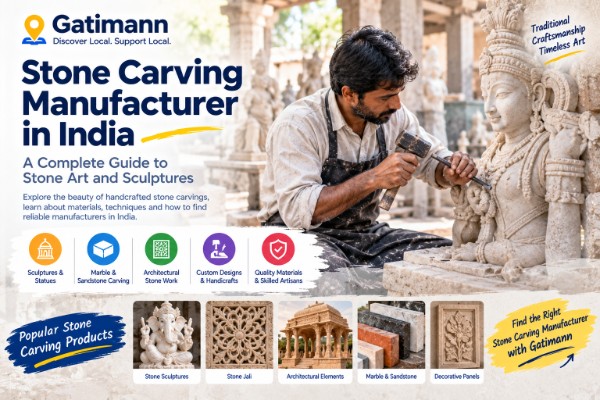
Stone Carving Manufacturer in India: A Complete Guide to Stone Art and Sculptures
India has a rich heritage of stone craftsmanship, with artisans creating intricate sculptures, decorative panels, temple designs, architectural elements, and artistic stone products. From traditional hand-carved designs to modern precision carving, the stone carving industry serves residential, commercial, religious, and architectural projects.
If you are searching for a Stone Carving Manufacturer in India, understanding the available materials, carving styles, manufacturing process, and supplier selection criteria can help you make a better decision.
Gatimann helps users discover local businesses and suppliers through its online directory. In this guide, we explore stone carving products, manufacturing techniques, important buying considerations, and how you can search for relevant businesses in India.
What Is Stone Carving?
Stone carving is the process of shaping natural stone by cutting, chiselling, grinding, and polishing it to create a specific design or product. Skilled artisans transform raw stone into decorative artwork, sculptures, architectural components, and other useful items.
Traditional Indian stone carving is closely connected with temple architecture, monuments, cultural heritage, and regional craftsmanship. Modern manufacturers may also combine traditional hand-carving methods with machinery and computer-controlled cutting techniques to achieve detailed and consistent designs.
The choice of stone, design complexity, dimensions, and finishing requirements determines the production process and final appearance.
Types of Stone Carving Products in India
A stone carving manufacturer in India may produce a wide variety of products according to customer requirements.
1. Stone Sculptures and Statues
Stone sculptures are used in gardens, public spaces, homes, hotels, cultural projects, and religious settings. They can feature human figures, animals, traditional motifs, abstract designs, and other artistic forms.
When ordering a sculpture, confirm its dimensions, material, level of detailing, surface finish, and installation requirements.
2. Marble Stone Carving
Marble is widely used for decorative artwork, sculptures, religious idols, ornamental panels, and interior features. Its appearance and workability make it suitable for designs that require fine detailing.
Buyers should discuss marble quality, colour variation, design complexity, and polishing requirements with the manufacturer.
3. Sandstone Carving
Sandstone is used for architectural decoration, wall panels, columns, screens, garden structures, and traditional building elements. Different sandstone varieties offer different colours, textures, and working characteristics.
The appropriate sandstone depends on the intended application, exposure to weather, design, and required finish.
4. Stone Jali and Decorative Panels
Stone jali is a carved or cut screen featuring decorative patterns and openings. These elements can be used in architectural façades, partitions, balconies, temples, and selected interior designs.
Before placing an order, confirm the pattern, thickness, dimensions, installation method, and suitability for the intended location.
5. Architectural Stone Carving
Architectural stone carving includes decorative columns, pillars, arches, cornices, door frames, wall features, and ornamental building elements.
Such projects may require technical drawings, accurate measurements, structural coordination, and careful installation planning.
6. Custom Stone Art and Handicrafts
Manufacturers and artisans may also create customised stone nameplates, decorative objects, carved motifs, small sculptures, and other artistic products.
Custom work is particularly useful when buyers have a specific design, reference image, or project requirement.
Popular Materials Used by Stone Carving Manufacturers
Selecting the right material is one of the most important steps in a stone carving project.
Marble
Marble is commonly selected for sculptures, decorative pieces, and ornamental work. Its colour and natural patterns can give finished products a distinctive appearance.
Sandstone
Sandstone is often used for architectural elements, decorative panels, and outdoor features. Its suitability depends on the specific variety and the conditions in which the product will be installed.
Granite
Granite is a hard natural stone used for selected sculptural and architectural applications. Its hardness can influence the tools, production time, and cost required for carving.
Soapstone and Other Natural Stones
Soapstone and other suitable natural stones are used for certain decorative objects and detailed craft products. The best choice depends on the required design, durability, finish, and intended use.
A reliable manufacturer should explain the characteristics and limitations of the proposed material before production begins.
How Does the Stone Carving Manufacturing Process Work?
The manufacturing process varies according to the product, material, and level of detailing. However, many projects follow these general stages.
Step 1: Design and Planning
The manufacturer reviews the customer's requirements, sketches, reference images, dimensions, and intended application. A drawing or sample may be prepared to clarify the design before production.
Step 2: Selection of Raw Material
The appropriate stone is selected based on its appearance, strength, texture, dimensions, and suitability for the project. The manufacturer should inspect the material for visible cracks and other relevant defects.
Step 3: Cutting and Shaping
The raw stone is cut into a suitable block or slab. Artisans or machines then remove unwanted material to establish the basic shape of the product.
Step 4: Detailed Carving
The design is developed using chisels, hammers, grinding tools, specialised machinery, or CNC equipment, depending on the project. Fine detailing can require considerable time and skilled workmanship.
Step 5: Sanding and Finishing
The carved surface is smoothed and finished according to the product requirements. Finishing may include polishing or other suitable surface treatments.
Step 6: Quality Inspection and Delivery
Before dispatch, the finished item should be checked against the approved design, measurements, material specifications, and finish requirements. Large or fragile products may need specialised packaging and transport arrangements.
How to Choose a Reliable Stone Carving Manufacturer in India
Finding the right manufacturer requires more than comparing prices. Consider these factors before confirming an order.
Review Previous Work
Ask for photographs, samples, or examples of completed projects similar to your requirements. Detailed carving, large architectural components, and sculptures may require different levels of expertise.
Check Material Quality
Discuss the stone variety, source where relevant, colour consistency, visible defects, and suitability for indoor or outdoor use.
Confirm Customisation Options
If you need a unique design, ask whether the manufacturer can work from drawings, reference images, dimensions, or a custom pattern.
Compare Pricing and Quotations
Request a detailed quotation that explains material costs, carving charges, finishing, packaging, transport, and installation where applicable. Compare quotations for the same specifications rather than price alone.
Ask About Production Time
Hand-carved and highly detailed products can take longer to manufacture than simpler designs. Confirm the estimated production schedule and delivery arrangements in writing.
Verify Business Details
Check the business address, contact information, available portfolio, customer feedback, and relevant business credentials. For larger orders, consider inspecting samples or arranging a site visit where practical.
Stone Carving Manufacturers in Rajasthan and Other Indian Regions
India has several recognised stone-carving traditions and craft clusters. Different regions are known for particular materials, artistic styles, and forms of craftsmanship.
Rajasthan has a strong association with stone architecture and decorative stonework. Other established carving traditions can be found in regions such as Odisha and Andhra Pradesh.
The best location for sourcing depends on the material, product type, order quantity, delivery requirements, and availability of suitable manufacturers. Buyers should compare individual businesses instead of assuming that every supplier in a particular region offers the same products or capabilities.
Factors That Affect Stone Carving Prices
There is no single price for all stone carving products. The total cost depends on several variables.
Stone type: Different natural stones have different material costs and working characteristics.
Size and weight: Larger products generally require more raw material and may need specialised handling.
Design complexity: Intricate patterns and fine detailing can increase labour and production time.
Production method: Hand carving, machine carving, and CNC processing have different cost structures.
Finishing requirements: Polishing and other finishes may add to the total cost.
Quantity: Bulk orders may have different per-unit costs depending on the design and production setup.
Packaging and transportation: Heavy or delicate items may require additional protection and logistics.
For an accurate estimate, provide the manufacturer with dimensions, material preferences, design references, quantity, finish, and delivery location.
Find Stone Carving Businesses Through Gatimann
Gatimann is an online business directory that helps users explore listed businesses and their available information. If you are searching for a Stone Carving Manufacturer in India, you can use the platform as a starting point to discover relevant businesses and investigate their services.
You can begin at the Gatimann website and explore the available listings.
When reviewing a business, check its location, contact information, product range, and other published details. Contact the supplier directly to confirm whether it manufactures the specific stone products you need.
For manufacturers and suppliers, maintaining accurate business information can also help potential customers understand their offerings and find their business online.
Benefits of Working With a Suitable Stone Carving Manufacturer
Choosing a manufacturer whose skills match your project can make the sourcing process more straightforward.
Design flexibility: Custom requirements can be discussed before production begins.
Material guidance: Experienced suppliers can help identify suitable stone options.
Craftsmanship: Skilled carving can add artistic detail and visual character.
Project coordination: Clear specifications help align production, finishing, and delivery.
Consistent requirements: Approved drawings and samples can help clarify expectations for repeat orders.
These benefits depend on the individual manufacturer's capabilities, communication, and quality-control practices, so verify them before placing an order.
Frequently Asked Questions (FAQs)
1. What does a stone carving manufacturer in India produce?
A stone carving manufacturer may produce sculptures, statues, marble and sandstone carvings, decorative panels, stone jali, architectural elements, and customised stone handicrafts. The available products vary by manufacturer.
2. Which stone is best for carving?
The best stone depends on the design and intended use. Marble is used for many decorative sculptures, sandstone for various architectural features, granite for selected durable applications, and soapstone for certain detailed craft products.
3. How do I find a reliable stone carving manufacturer in India?
Review previous work, verify business details, discuss material quality, compare detailed quotations, confirm production timelines, and check the manufacturer's ability to meet your design requirements. Online directories such as Gatimann can help you begin your search.
4. What factors affect the cost of stone carving?
Material, product dimensions, design complexity, labour, production methods, finishing, order quantity, packaging, and transportation can all affect the final price.
5. Can stone carving manufacturers make customised designs?
Some manufacturers accept customised work based on sketches, photographs, drawings, or project specifications. Confirm design feasibility, material suitability, costs, and production timelines before placing an order.
6. Is hand carving better than machine carving?
Neither method is universally better. Hand carving can be suitable for artistic detailing and traditional designs, while machine or CNC carving can help achieve precision and repeatability. Some projects combine both methods.
7. Which Indian regions are known for stone carving?
Stone-carving traditions exist in several parts of India, including Rajasthan, Odisha, and Andhra Pradesh. Different regions have distinct craft traditions, materials, and product specialisations.
8. What information should I provide when requesting a quotation?
Provide the product dimensions, preferred stone, design or reference image, required quantity, surface finish, intended installation location, and delivery address. These details help the manufacturer prepare a more relevant quotation.
9. Can I find stone carving businesses on Gatimann?
You can explore Gatimann to discover available business listings. Check each listing and contact the business directly to confirm its stone carving services and current availability.
Conclusion
Choosing the right Stone Carving Manufacturer in India involves understanding the available materials, reviewing craftsmanship, comparing quotations, and confirming that the manufacturer can meet your design and delivery requirements.
From marble sculptures and sandstone panels to decorative jali and architectural stonework, Indian stone craftsmanship offers a wide range of possibilities for residential, commercial, religious, and heritage projects.
Use Gatimann as a starting point to explore local businesses and available supplier information. Review each business carefully and confirm the necessary details directly before placing an order.
Contact Information
Website: Gatimann
For more information about local businesses, marble murti manufacturers, and suppliers in India, visit Gatimann.